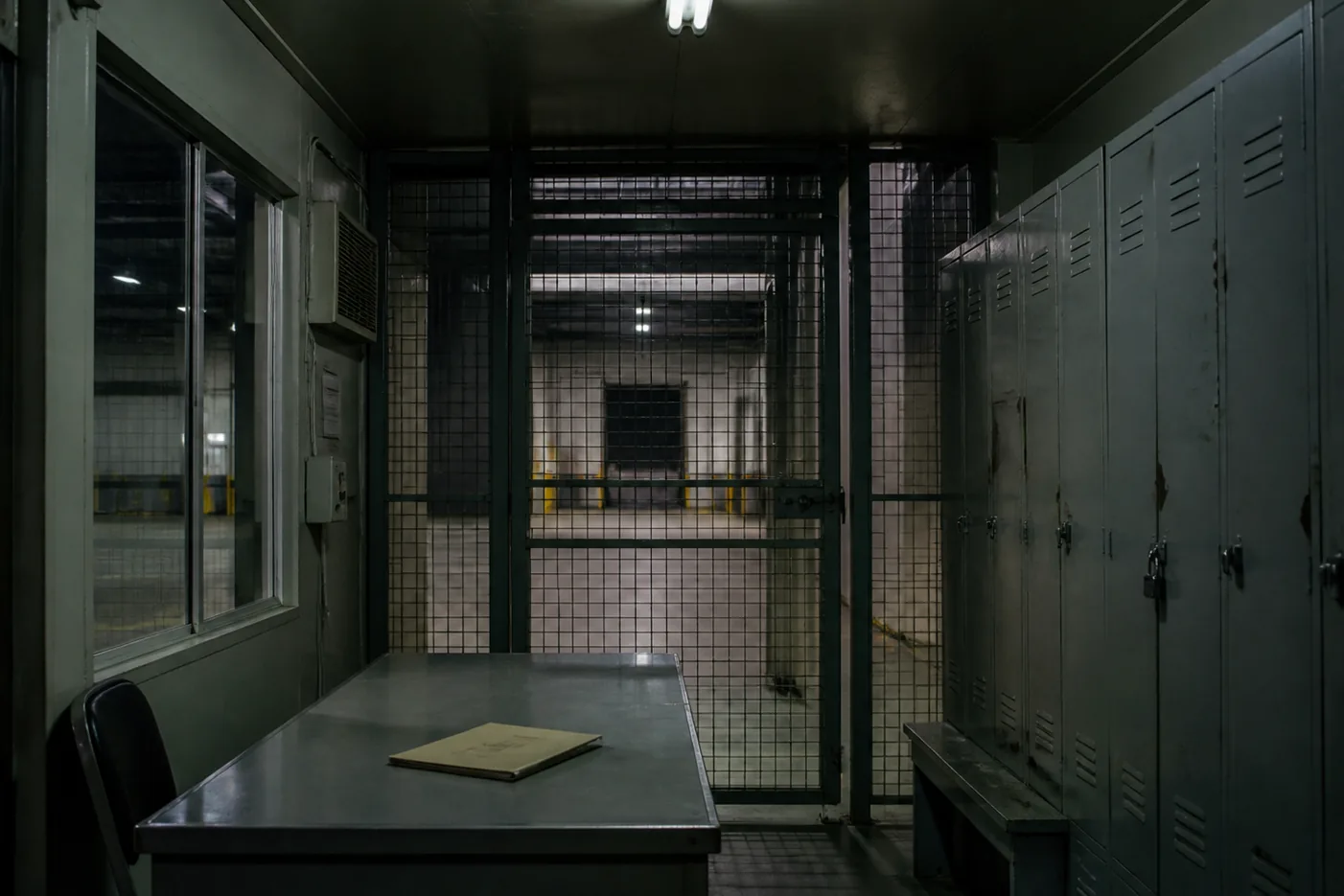
An invoice lies under a strip of fluorescent light that makes the paper look damp. It names cotton T-shirts. It names a seller and a price.
Beside it sits a product description with the ordinary confidence of a thing that has already been packed, shipped, unloaded and counted. On the screen somebody has typed 6109.10. The first six digits aren’t where your trouble begins. They’re where the work becomes visible.
Delacroix has the desk opposite and has been doing this since before the system you’re using existed.
“Read it to me in pairs.”
“Sixty-one. Oh-nine. Ten.”
“That’s chapter, heading, subheading. Now tell me what it says.”
Knitted or crocheted T-shirts, singlets and similar garments, then cotton. It’s a proper six-digit HS subheading, and it will be recognisable to people who have never met each other and work under different flags.
The Harmonized System carries twenty-one sections, ninety-six chapters, over twelve hundred headings and more than five thousand subheadings.
None of that is useful to you until the product description is in front of you and the six digits have to be earned out of its wording.
“The invoice calls them shirts,” you say.
“The invoice can call them shirts all morning.” She doesn’t look up. “Chapter titles are convenience. Section titles are convenience. The heading wording and the legal notes control the row.”
She tells you the first six travel, and she says it the way somebody would describe a wire gauge or an axle spacing.
More than two hundred countries and economies use the HS as the basis of their customs tariffs. The World Customs Organization keeps the nomenclature under the International Convention on the Harmonized Commodity Description and Coding System, and its Harmonized System Committee can settle a classification question and publish the interpretation in the Compendium of Classification Opinions, or fold it into the Explanatory Notes. Not one of them gives your invoice a duty rate. The WCO maintains the name and the number. It has never charged anybody a duty. So you have 6109.10, and it isn’t yet the code your entry summary needs.
On the American side of the desk, the Harmonized Tariff Schedule extends that core out to ten digits, across more than seventeen thousand distinct statistical lines. The seventh digit is not an international discovery. Neither is the eighth, the ninth or the tenth.
They belong to a national schedule that runs ninety-nine chapters and twenty-two sections, because Chapters 98 and 99 carry domestic-only provisions — temporary duty programmes, re-imports, the things one country decided about itself.
“Six is shared,” Delacroix says. “The rest is ours.”
There’s nothing argumentative in how she says it. The European Union takes the identical six-digit core into an eight-digit Combined Nomenclature, then out to ten digits in TARIC, where measure-specific codes can catch anti-dumping duties and quotas. Two full codes can start together and separate. Your product hasn’t become two products. Two tariff schedules have started doing their own work on it.
You scroll down the line and make the mistake of thinking the rate is now solved. Classification found your row. It doesn’t choose the column.
Origin chooses the column, and origin is two questions wearing one word. For MFN and trade-remedy purposes it’s determined under non-preferential rules. For a lower agreement rate it’s determined under that agreement’s preferential rules. An entry can qualify for one and fail the other, because the two were never trying to find the same answer.
There’s a proof of origin in the file — usually a certificate, sometimes a declaration completed by the producer, exporter or importer where self-certification is allowed. That proof doesn’t make your goods originate anywhere. It lets the claim stand.
“Hold the proof,” she says.
“And if I can’t find it?”
“Then you take MFN.” She shrugs. “Doesn’t matter where they were really made. A paperwork failure and an origin failure arrive at the same rate column, and the column can’t tell them apart.”
Which is what a tariff schedule is actually for. Not to say what your product is, but to make an already classified product face the treatment available to it.
Then you check the layers sitting above the base rate, and they aren’t a menu.
Antidumping. Countervailing. Safeguard. Section 301. Section 232.
A Section 301 or 232 surcharge can stand beside an MFN or a preferential base rate, and an antidumping or countervailing duty can stand beside both of those. Each one is its own line on your entry, calculated against entered value or quantity. Addition. Not selection. You’ll get that wrong once and remember it.
The old examples stay useful because the paper remembers them. The Section 301 actions against China ran in stages across 2018 and 2019, reaching as high as twenty-five percent on two hundred billion dollars of goods. In 2025 the Section 232 rate on steel and aluminium doubled, from twenty-five percent to fifty.
Neither headline was ever a promise about your invoice. A remedy order has to be checked for this product-and-origin combination, today, because orders get added, revised in administrative reviews, and revoked in sunset reviews on clocks of their own. Your base line can sit perfectly still while the total duty moves around it.
The goods have already landed, which is when the other clock starts.
Entry goes through the Automated Commercial Environment and asks for release from CBP custody. It has to be filed within fifteen calendar days after landing from a vessel, aircraft or vehicle — or after arrival at the port of destination, where the goods moved in bond. Your sale date doesn’t move that deadline. Your invoice date doesn’t move it either. A product can be perfectly described and still be standing behind a fence while its commercial paperwork tells a completely different time.
You send the entry with your classification and your origin claim. Then the record goes into the part of the system that doesn’t explain its thinking to you.
Somebody there decides whether the box gets opened, and nobody consults you about it.
Yours is released. The word has weight, because a truck can now take the goods away.
It doesn’t mean your classification is final. It doesn’t mean origin is final. It doesn’t mean the duty has stopped moving. Release means only that CBP found no reason to hold the merchandise any longer at that moment. Your product goes into the importer’s hands while your number stays in the system, waiting to be read again.
Within ten working days after release, the importer of record files the entry summary with estimated duties and taxes — commonly CBP Form 7501.
That’s where classification, value and duty calculation get formally declared. The entry asked to move your goods. The entry summary hands customs the figures it will use to assess what’s owed.
An import specialist can question classification or value right here. No truck turns around because a question exists. The question just stays with the entry, which is a thing you’ll get used to.
The last clock is the quiet one. Under 19 U.S.C. § 1504, liquidation fixes classification, value and duty, and CBP has a year from the entry or reconciliation date to do it — extendable to four in total where it needs more information or the importer shows good cause.
The seventh digit, the origin proof, the base-rate column, the remedy layer. All of them can still arrive at that point and be judged together, as one set.
“And if they run out of time?”
“Then it’s deemed liquidated by operation of law.” She finally looks up. “At the rate and value and duty you asserted. No notice required.”
A deadline went into a revenue process, and then silence was made to count as an answer. An importer can now win an argument nobody ever had.
The invoice is still under the fluorescent light. The cotton T-shirts are somewhere else entirely, released into ordinary commerce, being folded onto a shelf by a person who will never see a chapter note.
Your first six digits did exactly the work they were built to do. The national tail chose a row. Origin chose a column. The duty layers got checked.
The goods have gone. The entry has not.
You close the schedule and put the proof of origin back with the file, because your code stopped being international the moment it had to be useful here. Delacroix slides the next invoice across. There’s a description on it you’ve never seen before, and six digits are hiding somewhere inside it.
Check the record
Sources
- WCO — Guidance on how to submit a Harmonized System Change ProposalAccessed 2026-08-18
- WCO — International Convention on the Harmonized Commodity Description and Coding SystemAccessed 2026-08-18
- WCO — HS Nomenclature 2022, Chapter 61Accessed 2026-08-18
- USITC — The 2026 Harmonized Tariff Schedule of the United States Item CountAccessed 2026-08-18
- USITC — What is legal in the HTS and why does it matter?Accessed 2026-08-18
- International Trade Administration — FTA Certificates of OriginAccessed 2026-08-18
- CBP — Immediate Delivery: End of Year Authorization 2024Accessed 2026-08-18
- eCFR — 19 CFR 163.11, Audit proceduresAccessed 2026-08-18
- USTR — Statement on Section 301 ActionAccessed 2026-08-18
- Federal Register — Proclamation 10947, Adjusting Imports of Aluminum and Steel Into the United StatesAccessed 2026-08-18